EN
EN
 it
it  fr
fr  de
de  ru
ru  pt
pt  es
es
Get in Touch with WeiYuanDa Now!


For LED lighting, automotive electronics, power modules, telecom equipment, and compact high-power devices, thermal management is often one of the first design risks to evaluate. When heat cannot move away from LEDs, power ICs, MOSFETs, rectifiers, converters, or driver circuits efficiently, the final product may face unstable output, faster aging, solder joint stress, or field failure. This is why many OEM customers search for Aluminum PCB China solutions when developing electronics that require both heat dissipation and mechanical stability.
An Aluminum PCB is not simply an FR-4 board with a metal plate attached. It is a metal-core PCB structure designed to create a shorter thermal path from heat-generating components to the aluminum base. For high-heat projects, the manufacturer must understand the board stack-up, dielectric layer, copper thickness, surface finish, assembly process, and real application conditions together.
This article has been revised to focus less on repeated supplier claims and more on what customers should actually check when choosing an Aluminum PCB manufacturer in China.
The search intent behind Aluminum PCB China is usually practical. Customers are not only looking for a lower unit price. They often need a manufacturing partner that can support prototype validation, quick communication, material suggestions, small-batch production, and stable repeat orders.
China has a mature PCB manufacturing supply chain, which can make it easier to access different aluminum-based laminates, copper weights, board thicknesses, solder mask options, and surface finishes. For LED modules, power supply boards, automotive control units, and telecom equipment, this supply chain can shorten development time when the supplier also provides engineering feedback.
However, high-heat electronics should not be treated as a generic PCB order. A reliable Aluminum PCB manufacturer should be able to discuss heat load, component placement, dielectric performance, copper weight, mounting method, and inspection requirements before production begins.
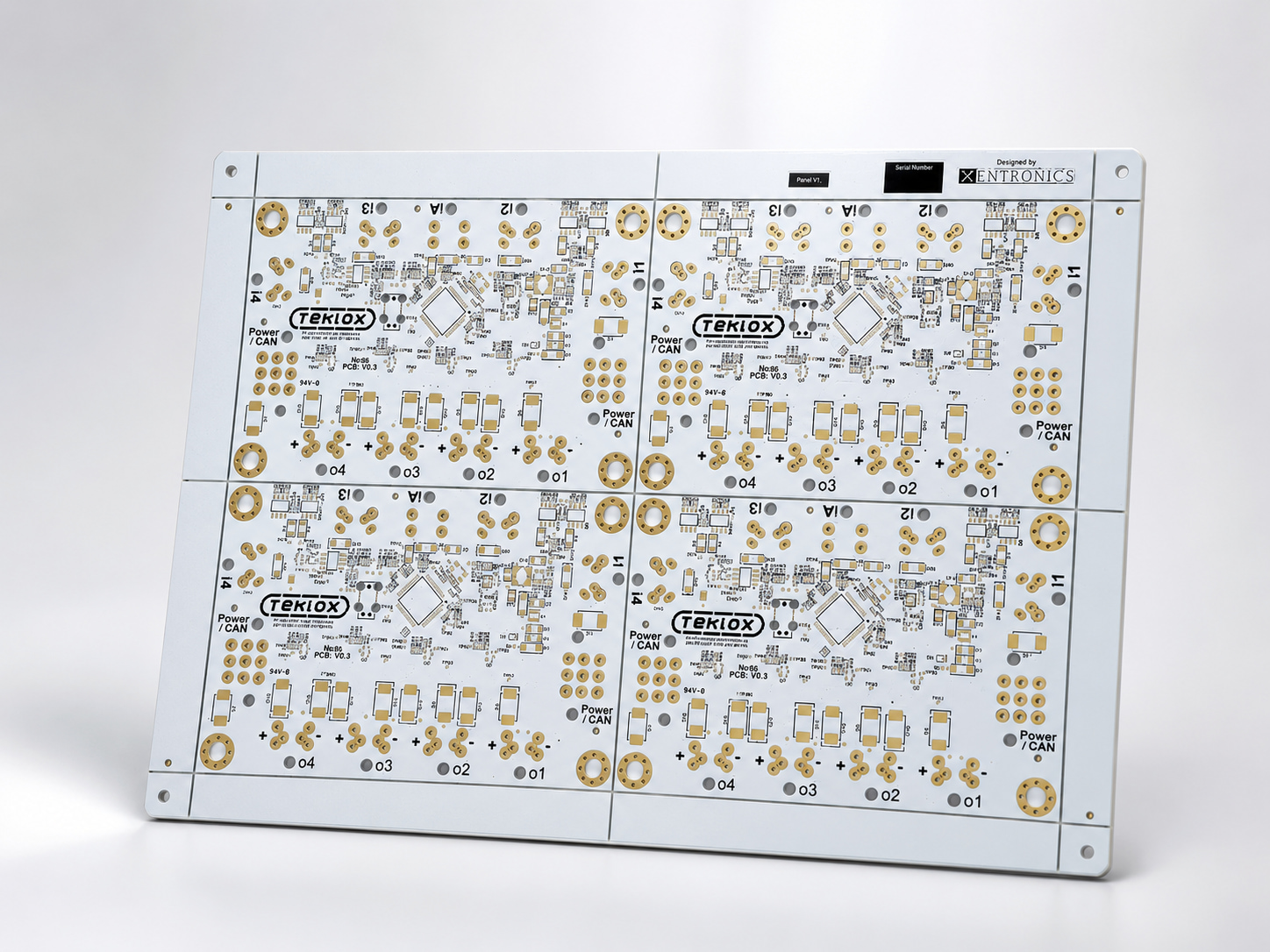
A useful way to evaluate a manufacturer is to ask whether the team can explain the Aluminum PCB stack-up clearly. In most LED and power electronics projects, the board includes a copper circuit layer, a thermally conductive dielectric layer, and an aluminum base. These layers must work together: the copper layer carries current, the dielectric layer transfers heat while maintaining insulation, and the aluminum base spreads heat into the housing or heat sink.
The dielectric layer is especially important because it directly affects insulation strength and heat transfer. If the dielectric layer is too weak thermally, the aluminum base cannot perform well even if the metal plate itself is thick. If copper weight is not matched with current demand, the board may generate excess heat around power traces or pads.
Layer | Main function | What to confirm before production |
Copper circuit layer | Carries current and connects components | Copper weight, trace width, pad design, solderability |
Thermal dielectric layer | Transfers heat while keeping electrical insulation | Thermal conductivity grade, dielectric thickness, insulation performance |
Aluminum base | Spreads heat and provides mechanical support | Base thickness, flatness, mounting method, surface requirement |
Thermal Conductivity describes how efficiently heat can move through a material. In an Aluminum PCB, heat generated by LEDs or power components moves from the component pads into the copper layer, passes through the thermally conductive dielectric layer, and then spreads into the aluminum base.
A higher thermal conductivity grade can help reduce thermal resistance, but it should not be evaluated alone. Customers should also consider dielectric thickness, copper thickness, board size, component power density, ambient temperature, and whether the PCB is mounted to a housing or heat sink. In real projects, a balanced stack-up is more useful than simply choosing the highest number on a datasheet.
Before confirming an Aluminum PCB manufacturer, customers should review practical manufacturing and communication capabilities instead of only comparing unit price.
· Layer capability: single-layer, double-layer, or more complex aluminum-based PCB structures depending on layout density.
· Material selection: suitable aluminum-based laminate, dielectric layer, copper weight, and board thickness for the actual heat load.
· Surface finish: OSP, ENIG, immersion tin, or other finishes based on soldering process and shelf-life requirements.
· Inspection capability: AOI, X-ray inspection, flying probe testing, and process control for high-reliability applications.
· Engineering response: ability to review Gerber files, stack-up, copper weight, application environment, and delivery expectations before production.
In LED lighting, Aluminum PCB helps move heat away from LED chips and driver circuits, supporting more stable brightness, better color consistency, and longer service life. In automotive electronics, it may be used in lighting modules, motor control circuits, and other areas exposed to temperature changes and vibration.
Power electronics is another important application area. Rectifiers, inverters, switching power supplies, converters, and power modules often combine high current with concentrated heat. A suitable Aluminum PCB design can reduce thermal stress around power components and support more stable operation.
Telecom and compact consumer devices can also benefit from aluminum-based construction when heat must be controlled in limited space. Because each application has different conditions, customers should avoid using one standard specification for every project.
WEIYUANDA PCB has more than 20 years of PCB manufacturing experience, covering Multilayer HDI, High-Frequency PCB, IMS, and customized aluminum-based PCB projects. For custom Aluminum PCB projects, customers can share Gerber files, stack-up requirements, copper weight, board thickness, surface finish, application environment, expected heat load, and production volume for engineering review.
Instead of only quoting from a drawing, the engineering team can help review manufacturing feasibility and support a more suitable PCB solution for the application. This is especially valuable for OEM customers moving from prototype validation to batch production.
Learn more about WEIYUANDA custom Aluminum PCB manufacturing capabilities or contact the WEIYUANDA PCB team for engineering review and quotation support.
Choosing the right Aluminum PCB manufacturer in China requires more than comparing prices. Customers should evaluate stack-up understanding, Thermal Conductivity knowledge, material selection, copper weight, surface finish, testing capability, application experience, and engineering response.
For LED lighting, automotive electronics, power modules, telecom equipment, and compact power devices, a well-designed Aluminum PCB can improve heat dissipation, mechanical reliability, and long-term product performance. The right partner should help customers connect thermal design, manufacturability, quality control, and delivery into one practical solution.