EN
EN
 it
it  fr
fr  de
de  ru
ru  pt
pt  es
es
Get in Touch with WeiYuanDa Now!


Inside every ultrasound probe, MRI coil, and patient monitor, faint biological signals travel through printed circuit boards at high frequencies. The quality of the substrate, the precision of the copper traces, and the stability of the dielectric material together determine whether a diagnostician sees a clear image or a noisy blur.
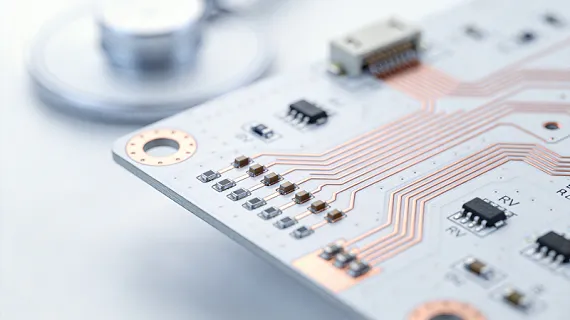
Modern healthcare depends on precision. From ultrasound imaging to patient monitoring and laboratory diagnostics, medical equipment converts faint biological signals into data clinicians can trust. The printed circuit boards inside these instruments carry high-frequency analogue and RF signals that are measured in microvolts and milliamps. At these levels, even the smallest amount of signal loss, noise, or impedance mismatch can degrade a measurement—and potentially affect a diagnosis.
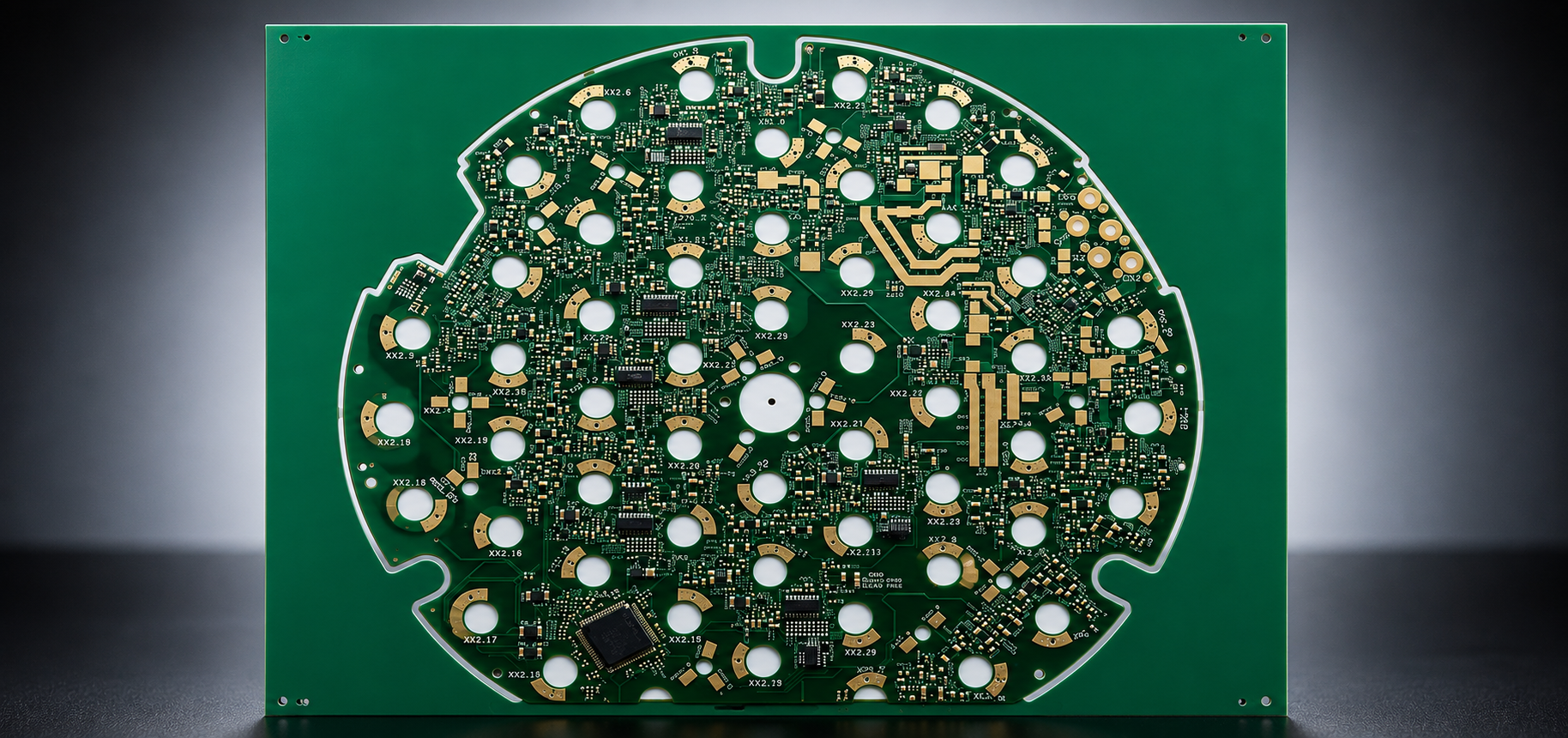
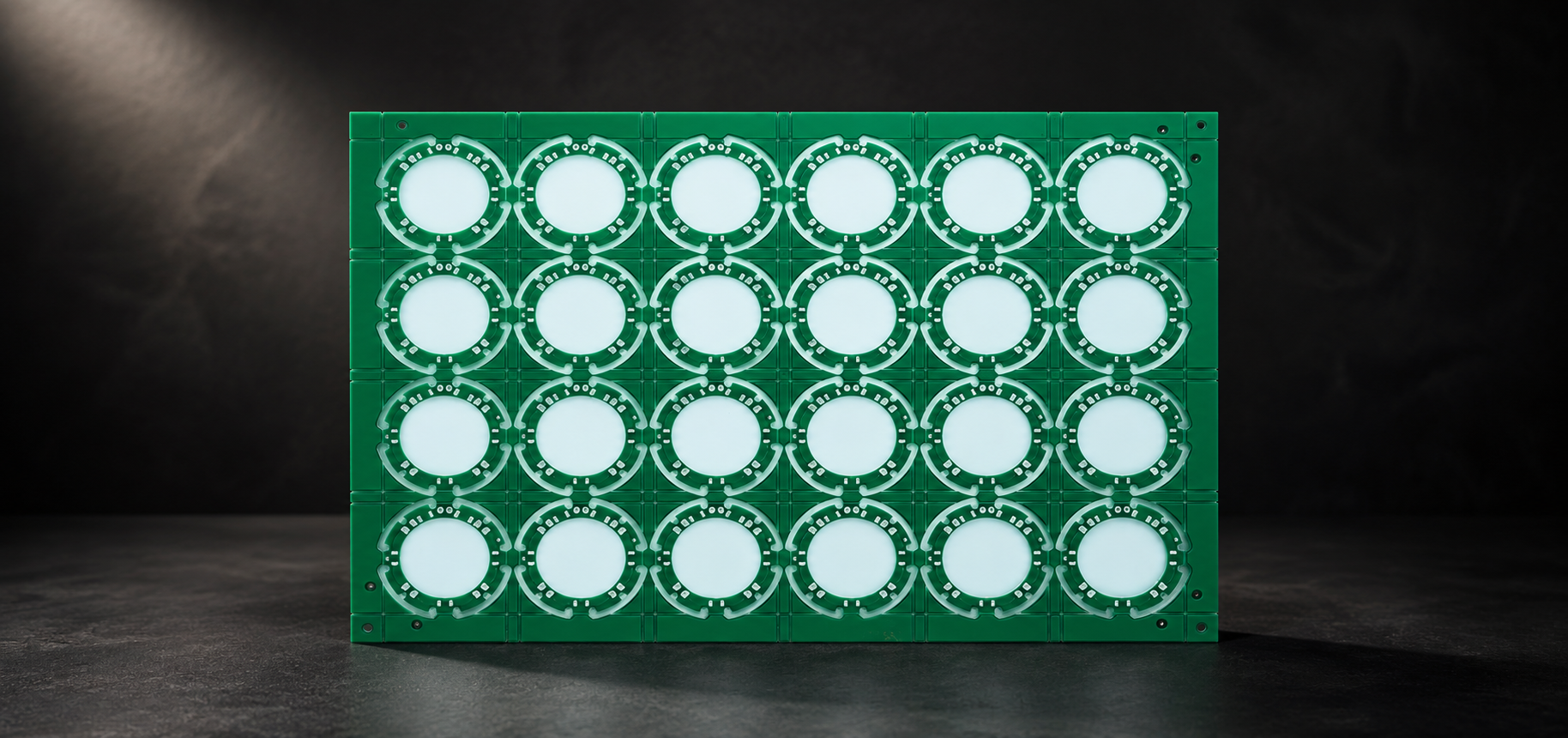
High-frequency PCBs built with low-loss laminates and controlled-impedance routing create the ultra-clean signal channels that precision medical equipment requires. This article examines why standard FR-4 boards are insufficient for sensitive medical applications, which materials and design choices produce the best signal fidelity, and how a manufacturer's production discipline translates into clinically reliable hardware.
WeiYuanDa Industrial Limited manufactures high-frequency PCBs for medical and life-sciences customers worldwide. With ISO 13485 certification, over 20 years of manufacturing experience, and a European support office in Italy, the company serves medical device developers across Northern Europe and beyond.
Medical electronic systems operate in a uniquely demanding environment. They must detect tiny physiological signals, often in the presence of electrical noise from motors, displays, power supplies, and other equipment inside the same enclosure. The front-end analogue path—the first few centimetres after the sensor or transducer—is the most critical stage. Once a signal is contaminated by noise or attenuated by substrate loss, recovering it without artefacts is difficult.
Why Frequency Matters
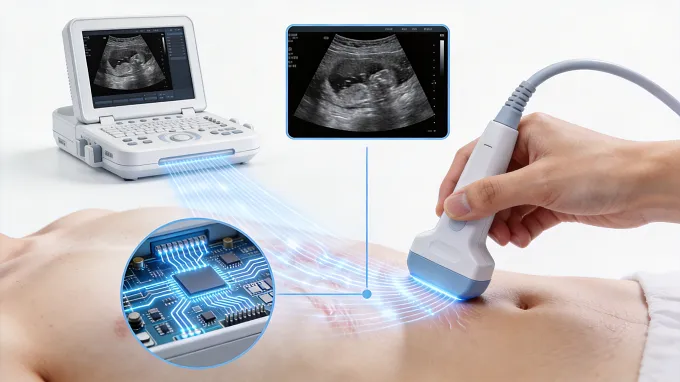
Many medical modalities work at surprisingly high frequencies. Ultrasound transducers, for example, commonly operate between 2 MHz and 18 MHz depending on the application, with some high-frequency imaging probes extending well beyond 50 MHz. MRI RF coils resonate at 64 MHz for a 1.5T system and 128 MHz for a 3.0T system. Even patient monitoring equipment, while appearing low-bandwidth, often uses high-frequency carrier signals and switching regulators that demand careful PCB design.
At these frequencies, standard FR-4 substrates begin to show their limitations. Dielectric loss increases, signal velocity changes with temperature, and impedance tolerances widen. For a medical device manufacturer, the question is not whether high-frequency materials are better—it is whether the performance gain justifies the investment, and which material offers the best balance for a specific clinical application.
What 'Signal Cleanliness' Means in Practice
A clean signal channel in a medical context means three things. First, insertion loss must be low and predictable across the operating frequency band, so that front-end amplifier gain can be set correctly. Second, the characteristic impedance of transmission lines must be consistent and accurate—typically 50 Ω or 75 Ω with tight tolerances—so that impedance discontinuities do not cause reflections that degrade image quality or measurement accuracy. Third, electromagnetic interference from adjacent circuits or external sources must be suppressed through proper grounding, shielding, and layer stacking.
In diagnostic imaging equipment such as ultrasound scanners, these performance parameters directly affect image resolution, depth of penetration, and the ability to differentiate between tissue types. In laboratory analysers and point-of-care devices, they affect measurement repeatability and the lower limit of detection.
Choosing the right substrate material is the foundation of a clean signal path. WeiYuanDa works with four principal high-frequency laminate families, each suited to different medical performance requirements and cost levels.
Material family | Key properties | Medical relevance | Typical use | Frequency range |
Rogers RO4350B / RO3003 | Dk 3.0–3.5, Df as low as 0.0013, tight tolerance | Low signal loss, stable impedance across temperature | High-end ultrasound, MRI RF coils, lab instruments | Up to 77 GHz |
Taconic TLX / RF-35 | Low insertion loss, good thermal stability, low moisture absorption | Reliable performance under sterilisation and humidity cycles | Patient monitors, portable diagnostics, RF front-ends | Multi-GHz |
Arlon 85N | Tg 250°C, 0.20 W/m·K thermal conductivity, strong peel strength | Withstands high heat, mechanical stress, and harsh environments | High-power therapeutic devices, industrial medical systems | High-power GHz |
Isola IS620 | E-glass reinforced, stable up to 10 GHz | Cost-effective for mid-range medical applications | Secondary circuits, digital sections, lower-frequency sensors | Up to 10 GHz |
Material selection alone does not guarantee a clean signal path. The board must be designed, manufactured, and tested with consistent discipline across every layer.
Controlled Impedance Routing
Every high-frequency trace in a medical signal path has a target impedance value, typically 50 Ω for RF circuits or a specific differential impedance for high-speed data links. Achieving the target value requires precise control of trace width, dielectric thickness, copper weight, and the proximity of ground planes. WeiYuanDa manufactures high-frequency boards with impedance-controlled routing using microstrip and stripline configurations, with minimum line widths and spacings of 3 mil for standard designs and 2 mil for advanced HDI constructions.
Ground Planes and Shielding
Continuous ground planes are essential for both impedance control and electromagnetic shielding. In medical equipment, where analogue front-end circuits sit near digital processing circuits and power supplies, proper partitioning and grounding prevent noise coupling. WeiYuanDa's multi-layer high-frequency designs typically include dedicated ground planes adjacent to signal layers, with via stitching along shielded trace routes to provide continuous low-impedance return paths.
Thermal Stability
Medical equipment often operates for extended periods, sometimes 24 hours a day in hospital and clinical settings. Components warm up, the enclosure heats, and the PCB substrate temperature rises. If the dielectric constant of the material changes significantly with temperature, the impedance of controlled-impedance traces drifts and the performance of RF circuits shifts.
High-frequency laminates from Rogers, Taconic, and Arlon are engineered for stable electrical properties across temperature ranges commonly found in medical equipment. Combined with proper thermal design—thicker copper planes, thermal vias, and carefully chosen surface treatments—these materials help ensure that a medical device performs consistently from the moment it is turned on until the end of a long clinical day.
A well-designed PCB can still fail in the field if it is not manufactured with consistent precision. For medical equipment, where reliability and repeatability are non-negotiable, manufacturing discipline matters as much as the design itself.
Material Traceability and Storage
High-frequency laminates are sensitive to moisture and temperature. If they are stored incorrectly before production, their properties can change. WeiYuanDa maintains controlled material storage and uses large-scale stock of certified laminates from Rogers, Taconic, Arlon, and Isola, ensuring that production always begins with material in spec.
Copper Foil and Surface Smoothness
The roughness of the copper foil affects high-frequency signal loss—rougher surfaces increase insertion loss due to the skin effect. WeiYuanDa uses smooth copper foils for high-frequency medical applications, paired with low-loss solder masks that do not add unnecessary dielectric loss to signal traces.
Precision Drilling and Registration
In multi-layer boards, the alignment (registration) of each layer determines the consistency of via placement and, ultimately, the impedance of plated through-holes. WeiYuanDa's manufacturing process includes precise layer-to-layer registration control, which is essential for high-frequency boards where even small misalignments can affect signal performance.

Testing and Verification
Every high-frequency medical PCB from WeiYuanDa undergoes electrical testing, including impedance verification, continuity checks, and insulation resistance testing. For medical device manufacturers, this testing provides assurance that the boards that go into an instrument are consistent with the ones that were validated during regulatory approval.
WeiYuanDa holds ISO 13485 certification, the quality management standard specific to medical devices. ISO 9001, ISO 14001, IATF 16949, and UL certifications further document the company's quality and regulatory capabilities.
WeiYuanDa Industrial Limited has been manufacturing high-frequency, HDI, and specialised PCBs since 2005. From its production base in Dongguan, China, and its European support office in Italy, the company serves medical device and life-sciences customers across more than 50 countries.
What distinguishes WeiYuanDa for medical projects is not only technical capability but also the structure of its support. A team of more than 24 engineers provides technical review of Gerber files within 6 hours of receipt. Prototyping can be turned around in as little as 1 day. RFQ responses are provided within 2 hours. For medical device developers working under tight project timelines and regulatory milestones, this speed combined with technical depth is a practical advantage.
European Presence and Service
The company's Italy office gives European customers—including those in Nordic countries—a local point of contact for technical discussions, project management, and logistics support. For medical device companies that prefer working with manufacturers who understand European regulatory expectations and quality standards, this local presence simplifies communication and reduces time-zone friction.
Q: Are high-frequency PCBs necessary for all medical devices?
A: No. Simple digital devices, low-frequency sensors, and power-only circuits often perform adequately with standard FR-4. High-frequency materials become important where the signal frequency exceeds several hundred megahertz, where signal amplitudes are very small, or where impedance accuracy directly affects measurement quality—such as in ultrasound front-ends, MRI RF coils, and high-speed laboratory analysers.
Q: What is the lead time for medical high-frequency PCB prototypes?
A: WeiYuanDa can deliver high-frequency PCB prototypes in as little as 1 day for standard configurations. More complex multi-layer HDI designs require additional time. Engineering file review is completed within 6 hours, and RFQ responses are provided within 2 hours of receiving design files.
Q: Can WeiYuanDa support medical device regulatory documentation?
A: WeiYuanDa is certified to ISO 13485, the quality management standard for medical devices. This certification demonstrates that the company's manufacturing processes and quality systems meet the requirements expected by medical device regulators. Manufacturers should discuss specific documentation needs with the WeiYuanDa engineering team during project planning.