EN
EN
 it
it  fr
fr  de
de  ru
ru  pt
pt  es
es
Get in Touch with WeiYuanDa Now!


In today’s fast-paced electronics industry, printed circuit boards (PCBs) are the foundation of nearly every device. While single-layer and double-layer PCBs serve basic applications, the demand for higher density, stability, and performance in advanced systems has made 4-layer PCBs an industry standard.
A well-engineered 4-layer PCB board delivers superior signal integrity, better electromagnetic compatibility, and reliable power distribution. From compact medical devices to robust aerospace systems, these boards enable next-generation product development. This article explores the fundamentals of 4-layer PCB design, manufacturing, and applications while highlighting how a professional manufacturer can ensure long-term success.
A 4-layer PCB is a multilayer circuit board made up of four copper layers separated by dielectric insulation. Unlike a two-layer PCB, which has limited routing space, the additional layers in a 4-layer PCB allow designers to optimize power delivery and signal routing.
Common stackup configurations include:
Signal – Ground – Power – Signal
Ground – Signal – Power – Ground
The selection depends on design requirements such as signal speed, power distribution, and EMI control. Standard thickness is typically around 1.6 mm, though thinner or specialized stackups can be manufactured for compact devices.
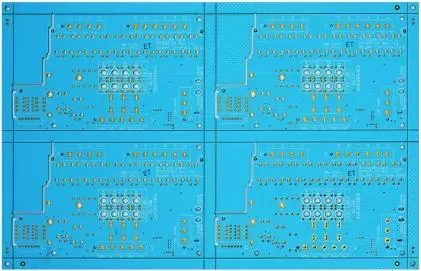
Improved Signal Integrity – Inner ground planes provide shorter return paths, reducing crosstalk and signal distortion.
Lower Electromagnetic Interference (EMI) – Strategic placement of planes minimizes interference, improving reliability in sensitive applications.
Compact Design – More routing layers support complex circuits without enlarging the board footprint.
Enhanced Power Distribution – A dedicated power plane ensures stable voltage delivery to components.
Flexibility for Modern Devices – Variants such as rigid-flex and flexible 4-layer PCB stackups enable integration in small, irregular enclosures like wearables.
Designing a 4 layer PCB prototype requires following strict engineering rules:
Layer Allocation: Ground planes should be adjacent to signal layers for shielding.
Controlled Impedance: Essential in high-frequency designs for medical imaging and mobile communication.
Thermal Management: Proper 4 layer PCB stackup thickness helps in distributing heat evenly.
Clearances and Trace Widths: Following IPC standards ensures manufacturability.
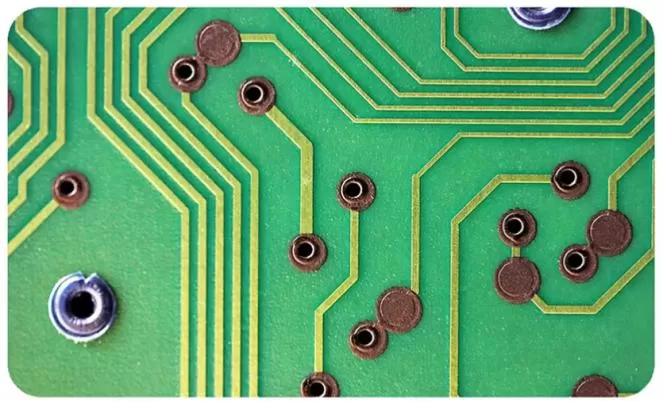
Professional designers rely on 4 layer PCB design guidelines and 4 layer PCB design rules to minimize errors and maximize manufacturability.
Designing a 4-layer PCB involves more than simply adding extra copper layers. Engineers face several challenges when creating reliable boards for high-performance applications. Understanding these issues and applying best practices ensures optimal performance and manufacturability.
1. Managing Signal Integrity in High-Speed Circuits
As devices become faster and more complex, high-speed signal routing is critical. Improper trace lengths or poor layer assignment can cause crosstalk, reflections, or signal loss. Using controlled impedance design and careful placement of ground and power planes mitigates these risks, which is particularly important in medical electronics, mobile devices, and IoT modules.
2. Thermal Management
High-density components and power electronics generate significant heat, which can affect PCB performance and reliability. Designers must optimize copper thickness, layer arrangement, and heat dissipation strategies. Including thermal vias or dedicated heat planes in a 4-layer stackup can prevent hotspots and ensure stable operation.
3. Routing Complexity and Component Density
Compact consumer electronics and wearable devices often require tight component placement. Utilizing multilayer routing efficiently helps minimize board size without compromising functionality. Flexible 4-layer PCB stackups allow bending and folding, enabling innovative product designs while maintaining signal integrity.
4. Compliance and Reliability Standards
For applications in medical devices, automotive electronics, and aerospace, boards must meet rigorous safety and regulatory requirements. Designers should follow industry standards such as IPC-2221 and IPC-6012 for layout, spacing, and material selection. Proper documentation of the 4-layer PCB design ensures repeatable manufacturing quality and reduces the risk of failures during testing or operation.
5. Collaboration Between Design and Manufacturing Teams
Close communication between PCB designers and manufacturers is key. Reviewing stackup options, via types, surface finishes, and assembly requirements early in the design phase prevents costly revisions later. For fast-turn prototypes and low-volume production runs, this collaboration ensures both manufacturability and performance without compromising deadlines.
By addressing these design challenges and applying best practices, engineers can maximize the benefits of 4-layer PCBs, creating boards that balance high performance, compactness, and reliability across a wide range of applications.
Producing a 4-layer PCB involves several advanced steps:
Lamination – Bonding copper foils and dielectric materials to create the multilayer stack.
Imaging & Etching – Defining circuit patterns using photoresist and chemical etching.
Drilling & Plating – Adding vias to connect inner and outer layers.
Surface Finishing – Applying coatings such as ENIG, HASL, or OSP for solderability and durability.
Assembly – Mounting components through SMT or THT processes.
Testing – Comprehensive electrical and functional testing ensures quality.
Advanced manufacturers also provide fast-turn prototyping, 4-layer PCB assembly, and turnkey services, reducing time-to-market for new products.
4-layer PCBs are widely used in diagnostic imaging, patient monitoring, and portable medical devices where signal accuracy and reliability are critical.
Smartphones, tablets, and wearables benefit from compact 4-layer PCB layouts. Flexible 4-layer stackups make it possible to fit high-performance circuits into ultra-slim designs. Here click for 5g printed circuit board
Automotive ECUs, infotainment systems, and aerospace avionics rely on durable 4-layer copper PCBs. Their ability to handle double-sided reflow soldering and withstand harsh environments ensures long-term performance. Here click for car PCB board
From smart factories to robotics and IoT gateways, 4-layer PCB manufacturing supports scalable, industrial-grade solutions. Companies can balance cost, complexity, and functionality when deploying connected systems.
High-Frequency Materials – Supporting 5G and IoT applications.
Thinner 4 Layer PCB Stackup – Catering to ultra-compact mobile and medical devices.
Eco-Friendly Manufacturing – Using sustainable laminates and energy-efficient processes.
Integration with AI – AI-driven 4 layer PCB design for optimized layouts and faster prototyping.
Choosing the right partner is as important as the design itself. WEIYUANDA PCB is a trusted 4 layer PCB manufacturer with decades of expertise, serving clients across medical, electronics, mobile, automotive, and industrial sectors.
Comprehensive Capabilities: From single-layer to advanced 4 layer PCBs, multilayer boards, flex, and rigid-flex designs.
Custom Services: Offering 4 layer PCB design services, custom stackup engineering, and full assembly solutions.
Fast Turn Prototypes: Rapid delivery of 4 layer PCB prototypes to accelerate product development.
Advanced Manufacturing: Precision facilities for 4 layer PCB layout fabrication, 4 layer reflow soldering, and automated testing.
Global Recognition: Supplying over 40 countries with certified, reliable PCB solutions.
Whether you need a 4 layer PCB prototype for R&D or large-scale 4 layer PCB manufacturing for commercial deployment, WEIYUANDA ensures precision, speed, and reliability.
4-layer PCBs play a critical role in enabling high-performance electronics, offering superior electrical performance, compact designs, and dependable reliability. As industries continue to demand more advanced and efficient solutions, having a trusted high-tech PCB manufacturer is essential.
WEIYUANDA PCB combines engineering expertise, advanced facilities, and responsive customer service to deliver PCBs that meet the highest industry standards. Our boards power everything from medical imaging systems and smartphones to aerospace avionics and industrial IoT devices.
By choosing WEIYUANDA, you gain more than just a 4-layer PCB supplier—you secure a strategic partner dedicated to helping you bring innovation to market with precision, speed, and confidence.