EN
EN
 it
it  fr
fr  de
de  ru
ru  pt
pt  es
es
Get in Touch with WeiYuanDa Now!


The transition from a high-frequency PCB design to a reliable, production-ready board is rarely a straight line. For many hardware engineering teams, the most significant challenges emerge not during the initial layout phase, but when the design meets the realities of manufacturing. Misunderstandings about material behavior, unclear process capabilities, and inadequate design-for-manufacturing (DFM) feedback are common friction points. These issues can extend development cycles and increase project costs.
This guide outlines a practical framework for engineering collaboration, focusing on the key interactions and checks that help ensure a smooth progression from prototype to volume production.
Whether you are designing a high-frequency board for 5G infrastructure, radar systems, AI applications or satellite communications, how well your team collaborates with us (WYD) often determines whether a project stays on schedule — or suffers costly setbacks.
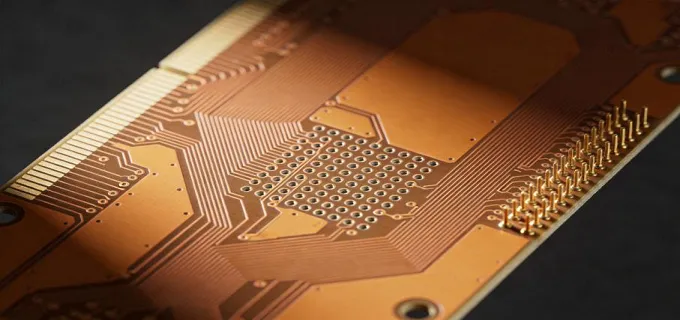
Before a single board is manufactured, a critical alignment needs to occur between the layout team and WYD QE Team. This is where the foundation for success is laid. In high-frequency PCB projects, small ambiguities in the specification phase can amplify into serious performance issues downstream.
Defining the Stack-Up Unambiguously
The layer stack-up is the core specification for any PCB. For high-frequency boards, the material choices and their arrangement dictate the board’s final performance — from impedance control to insertion loss and signal integrity at GHz frequencies.
Clear and complete documentation is the first rule. The stack-up information provided to the manufacturer must be unambiguous. This means specifying not just the material brand, but also the precise part number, stack up, and copper weight for each layer. A generic reference to a well-known laminate family can lead to unexpected variations, because different grades within the same family can have significantly different dielectric constants and loss tangents.
Pre-lamination simulation is a crucial step which reuqired by WYD QE Team. We can simulate the expected impedance for your specified stack-up before production begins. Requesting this simulation and a cross-section photo of a test coupon can help validate your design assumptions before committing to a full production run.
Evaluating Design for Manufacturability (DFM)
This proactive step can prevent costly errors and delays. Early design review is a best practice that separates well-run projects from those that suffer repeated spins. A thorough DFM review of your Gerber files is a standard part of a professional manufacturing partnership. This involves checking trace spacing, annular rings, component clearances, and via structures against the manufacturer’s specific process capabilities.
Establishing Clear Communication Protocols
Good communication is the backbone of successful projects. Agreeing on a technical point of contact is essential. Ensure that a designated engineer, not just a sales representative, is available on the manufacturer’s side to discuss technical issues. This direct line can dramatically speed up problem-solving during both prototype and production phases.
Using clear, visual feedback is more effective than text-only communication. When discussing issues or potential modifications, using marked-up images or annotated PDFs of the Gerber files to highlight specific areas can eliminate ambiguity and reduce the back-and-forth that often plagues complex technical projects.
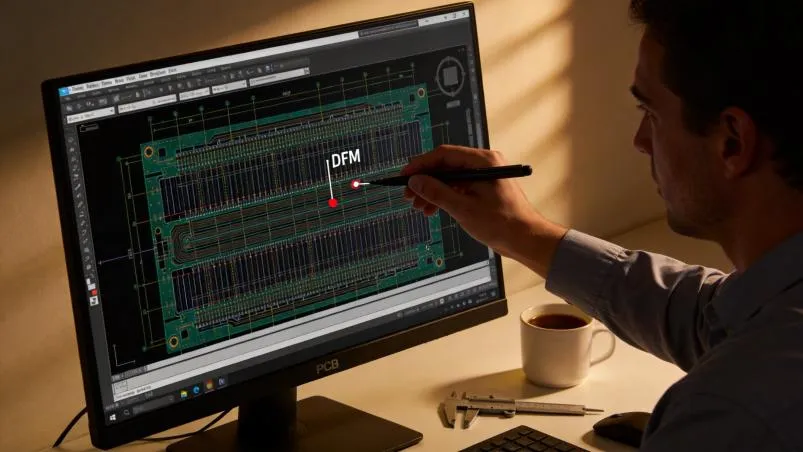
The prototype phase is a learning opportunity. It is about validating both your design assumptions and the ability of WYD to execute the specification consistently. Treat the first article as a joint learning exercise rather than a pass/fail test, and you will get more value out of the process.
Setting Realistic Expectations
Prototyping high-frequency boards can involve specific steps that add time compared with standard FR-4 designs. Discussing timeline requirements for processes like plasma treatment (required for some PTFE-based materials to improve adhesion) and specialized back-drilling is important. Understanding these dependencies early on helps in setting realistic project schedules and avoiding surprises.
Agreeing on a test plan for the prototype is a good practice. This should include which electrical tests (such as impedance testing or time-domain reflectometry) will be performed, and what the acceptance criteria are. Clarify whether the manufacturer will provide a formal test report and what format it will take.
Evaluating the Manufacturer’s Capability Through Prototypes
A first prototype run is often the best indicator of a manufacturer’s attention to detail and process control. Beyond whether the board functionally works, there are several quality indicators worth examining.
Checking impedance consistency is a key quality indicator. If the design calls for 50-ohm traces, ask for the actual test data across multiple panels and multiple locations on each panel. Consistency is often more important than hitting the exact nominal number, as it indicates a stable, well-controlled lamination and etching process.
Requesting a cross-section of a test coupon is a valuable way to evaluate internal quality. This provides visual confirmation of layer-to-layer alignment, via plating quality, resin fill, and copper uniformity. It reveals details that are not visible from the surface and can uncover process issues before they affect volume production.
Sharing a sample from a similar, successful project can be a powerful way to set quality expectations. Providing a reference board helps the manufacturer understand the level of precision, surface finish, and overall build quality you require — details that are hard to convey in words alone.
The relationship does not end when the boards are shipped. In fact, the post-production phase is where strong partnerships prove their real value. Issues can arise at incoming inspection, during assembly, or even in the field — and how quickly they are resolved matters.
Managing Incoming Inspection
Even with a high-quality manufacturer, incoming inspection is a good practice. Performing a visual inspection and checking for dimensional compliance against the mechanical drawings should be the first step. It is also wise to retain the test coupon provided by the manufacturer for future reference, failure analysis, or comparative testing if issues arise downstream.
Resolving Issues Efficiently
Problems can occasionally arise, even in the best-controlled processes. Having a clear issue-escalation process in place can save valuable time. Knowing exactly who to contact for engineering support — and ensuring that person has the technical authority to make decisions — helps resolve problems quickly instead of going through layers of administration.
Sharing full documentation is critical. If an issue is found, providing a clear description and high-resolution photos, along with the board’s batch number and date code, is essential for a swift and accurate root-cause analysis. The more complete the information, the faster the engineering team can identify the cause and propose corrective actions.
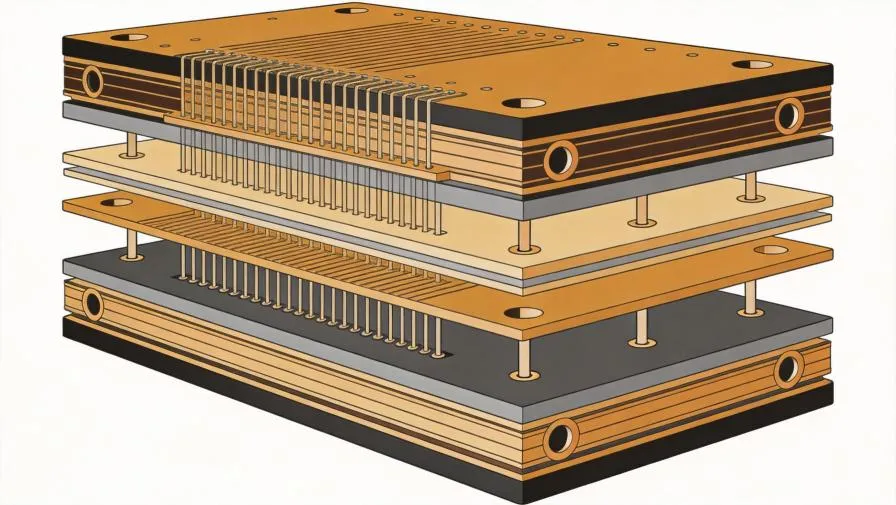
A manufacturer’s role is not simply to build boards to a drawing — it is to enable the entire workflow, from first design review to volume delivery. For teams working with a global partner, having local engineering support is a significant advantage that reduces communication friction and accelerates decision-making.
WeiYuanDa, through its WYD Italy office, is structured to provide this level of engineering collaboration for European customers. The company’s 20+ years of PCB manufacturing experience, combined with a team where 65% of staff hold over a decade of senior experience, means they bring deep process knowledge to every project review. This matters for high-frequency designs because the interaction between material properties, lamination parameters, and finished-board performance is complex and experience-dependent.
Key to effective collaboration is rapid and meaningful engineering feedback. With over 24 in-house engineers, WeiYuanDa offers Gerber reviews and DFM feedback within 6 hours, allowing design issues to be caught early — when they are cheapest to fix. This capability, backed by certifications including ISO 9001, ISO 14001, ISO 13485, and IATF 16949, provides a framework for consistent quality across both prototype and volume production stages.
For high-frequency PCB projects specifically, WeiYuanDa’s expertise in materials like Rogers laminates, combined with controlled-impedance manufacturing and advanced lamination processes, gives design teams a reliable partner from the earliest stack-up discussions through final volume delivery.
WeiYuanDa Industrial Limited is a global PCB manufacturer specializing in high-frequency, HDI, heavy copper, aluminum, and multilayer boards. With a 250-member team, 20+ years of manufacturing experience, and a European service point in Italy, the company supports OEMs across 5G telecom, medical, automotive, aerospace, and industrial sectors. To discuss a high-frequency PCB project or request engineering support, contact the WeiYuanDa team through the WYD Italy office or visit www.wyd-pcb.com.