EN
EN
 it
it  fr
fr  de
de  ru
ru  pt
pt  es
es
Get in Touch with WeiYuanDa Now!


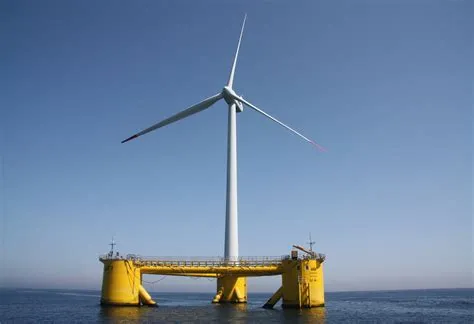
Wind turbines operate in some of the most demanding conditions any electronic system can face — continuous mechanical vibration, temperature swings from -40 °C to +70 °C, salt-laden atmospheres in offshore installations, and an expected service life exceeding 20 years. Within the nacelle and tower base, power conversion and control electronics depend on printed circuit boards that must carry high currents reliably while surviving these environmental stresses over decades. Conventional thin-copper PCBs with 1–2 oz copper foil degrade quickly under such conditions, suffering from thermal hotspot formation, solder joint fatigue, and trace corrosion. This article examines how heavy copper PCBs — with copper thicknesses of 3 oz and above — address the specific challenges of wind energy applications, covering the critical subsystems, environmental demands, and material design considerations that distinguish wind-rated boards from standard industrial PCBs.
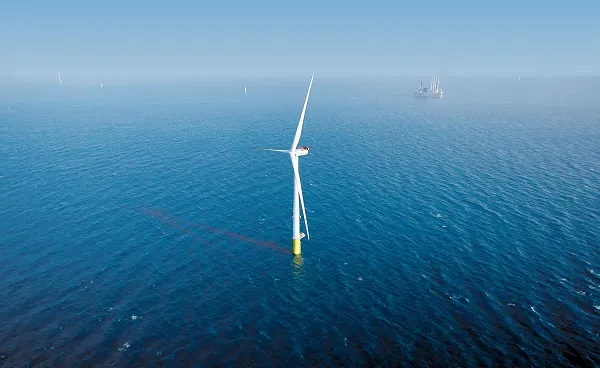
The global wind energy market has experienced sustained growth, with installed capacity surpassing 900 GW worldwide and offshore wind emerging as the fastest-growing segment. Modern utility-scale turbines now regularly exceed 10 MW rated power, and the industry standard design life has extended to 25 years for offshore installations. These trends place escalating demands on every component inside the turbine, particularly the power electronics that manage energy conversion, grid synchronization, and blade control.
Within a wind turbine, three subsystems place the highest electrical and thermal demands on PCBs:
Power converter systems that transform variable-frequency generator output into grid-compatible alternating current
Pitch control systems that adjust blade angle to optimize energy capture and protect against overspeed conditions
Yaw control systems that orient the nacelle into the wind direction
Each of these subsystems handles substantial currents, operates in a hostile mechanical environment, and must perform reliably for two decades with minimal maintenance access — especially in offshore deployments where a single service visit can cost tens of thousands of dollars in vessel charter and logistics.
Standard FR-4 circuit boards with 1 oz or 2 oz copper were never designed for these conditions. The result is a growing adoption of heavy copper PCBs in wind energy applications, where thicker copper conductors provide the current-carrying capacity, thermal stability, and long-term mechanical resilience that thin-copper alternatives cannot sustain.
WeiYuanDa Industrial Limited, established in 2005, manufactures heavy copper PCBs for industrial and energy-sector customers worldwide. The company supports copper thicknesses from 3 oz to 10 oz across single-layer to 24-layer constructions, holds ISO 9001, ISO 14001, IATF 16949, ISO 13485, and UL certifications, and operates production facilities in Dongguan with a European subsidiary in Italy for regional customer support.
Wind turbine PCBs face an environmental severity profile that few other applications can match. Unlike industrial electronics housed in climate-controlled cabinets, wind turbine boards operate in an uncontrolled mechanical environment with multiple simultaneous stress factors.
Extreme Thermal Cycling
Temperature within a wind turbine nacelle can swing from -40 °C during winter cold starts to +70 °C or higher near power electronics during summer operation. Each day-night cycle, each wind gust event, and each power ramp creates thermal transients in the PCB structure. Over a 20-year service life, a wind turbine PCB experiences an estimated 50,000 to 100,000 thermal cycles.
These repeated temperature changes cause mechanical stress at every interface where materials with different coefficients of thermal expansion (CTE) meet. The most vulnerable points are plated through-hole barrels, where the copper barrel (CTE approximately 17 ppm/°C) is constrained by the surrounding laminate substrate (CTE approximately 14–18 ppm/°C in the Z-axis for standard FR-4, and significantly higher above the glass transition temperature Tg).
Heavy copper PCBs address this challenge through two mechanisms. First, the thicker copper walls of plated through-holes provide greater mechanical cross-section to resist fatigue cracking. Second, when paired with high-Tg substrate materials (Tg ≥ 170 °C), the entire laminate structure remains dimensionally stable across the full operating temperature range, preventing the exponential increase in Z-axis expansion that occurs when standard FR-4 (Tg approximately 130–140 °C) exceeds its glass transition point.
Selecting and specifying heavy copper PCBs for wind turbine applications requires attention to several design parameters that differ from standard industrial or consumer electronics.
Copper Thickness Selection
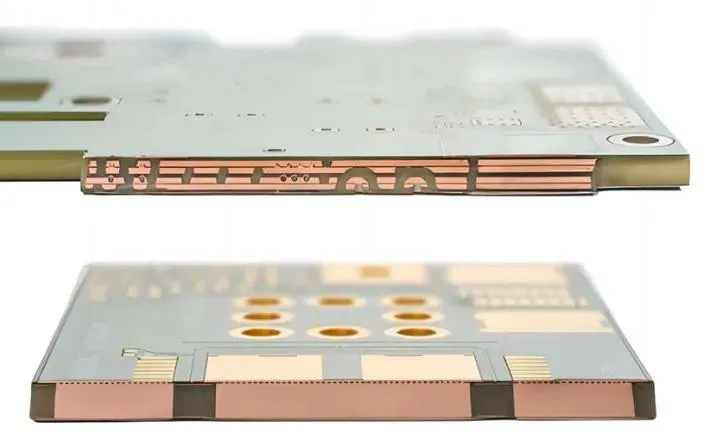
The appropriate copper thickness depends on the specific subsystem and current requirements:
Power converter DC-link and inverter boards: 4 oz to 6 oz copper is typical for main current paths carrying 200 A to 1000 A continuous. Some high-power designs specify 8 oz or 10 oz for the primary power layers
Pitch control servo driver boards: 3 oz to 4 oz copper provides adequate capacity for motor drive currents while maintaining fine-pitch routing capability for sensor interfaces
Yaw control and auxiliary boards: 2 oz to 3 oz copper is often sufficient, with selective thick-copper areas for motor drive circuits
WeiYuanDa supports differentiated copper thickness across layers within the same board — allowing thick copper (6 oz to 10 oz) for high-current power layers and thinner copper (1 oz to 2 oz) for signal layers with fine-pitch routing requirements. This hybrid approach optimizes both current capacity and manufacturing cost.
Substrate Material Selection
The substrate material is as critical as copper thickness for wind turbine reliability. Key material requirements include:
High glass transition temperature (Tg): Minimum Tg 170 °C, preferably Tg 180 °C or above, to ensure dimensional stability across the full temperature range and prevent Z-axis expansion damage to plated through-holes
Low moisture absorption: Below 0.10% to prevent dielectric degradation and CAF formation in humid offshore environments
High decomposition temperature (Td): Above 350 °C to withstand lead-free soldering processes without substrate degradation
Halogen-free composition: Required by most wind turbine OEM specifications for environmental compliance
WeiYuanDa specifies TG170 to TG280 halogen-free FR-4 substrates for wind energy heavy copper PCBs, matched to the thermal expansion characteristics of the thick copper foils for optimal long-term reliability under thermal cycling.
Surface Finish and Protection Strategy
For wind turbine applications, surface finish selection must balance corrosion resistance, solderability, and service life. The recommended approach for different installation environments:
Onshore turbines: ENIG surface finish provides excellent corrosion resistance and long-term solderability for the 20-year design life
Offshore turbines: ENIG combined with conformal coating (polyurethane or Parylene) provides dual-layer protection against salt mist and humidity
Extreme offshore (tropical/hot-humid): ENIG with Parylene conformal coating and edge sealing for maximum ingress protection
Layout and Thermal Design Guidelines
Effective thermal design in wind turbine heavy copper PCBs involves several key layout practices:
Wide power traces with generous clearance: Reduces current density and provides manufacturing tolerance margin for thick copper etching processes
Thermal via arrays under power devices: Copper-filled or copper-plated vias transfer heat from surface-mount power devices to internal thick-copper ground planes, creating an integrated heat-spreading network
Balanced copper distribution: Symmetrical copper layout across layers minimizes board warpage during thermal cycling and manufacturing
Keep-out zones near board edges and mounting holes: Reduces trace fracture risk at high-stress concentration points
Not all PCB manufacturers have the process capability, quality systems, and domain experience required for wind energy heavy copper PCBs. Engineering and procurement teams should evaluate potential suppliers across several critical dimensions.
Thick Copper Process Maturity
Producing reliable heavy copper PCBs requires mastery of specialized electroplating, etching, and lamination processes. Key capability indicators include:
Demonstrated ability to produce consistent copper thickness across large panel sizes (critical for maintaining uniform current distribution)
Experience with copper-filled via processes for thermal management
Capability to handle multi-thickness copper stack-ups (different copper weights on different layers within the same board)
Proven etching control for maintaining minimum line width tolerances with thick copper
Engineering Support and DFM Capability
Wind energy PCB designs often involve complex stack-ups, mixed copper thicknesses, and tight reliability requirements. Suppliers that offer Design for Manufacturability (DFM) review before production can identify potential fabrication risks early and suggest layout optimizations that improve yield and reliability without compromising electrical performance.
WeiYuanDa provides DFM review through a team of 24 PCB engineers who evaluate trace width optimization, thermal via placement, layer stack-up configuration, and material selection before production begins. This pre-production engineering support is particularly valuable for wind energy projects where design changes after prototype validation are costly and schedule-impactful.
Regional Support and Logistics
For European wind energy projects, having a local technical support presence reduces communication delays and accelerates issue resolution. WeiYuanDa maintains a wholly owned subsidiary in Italy with German- and English-speaking engineers who provide technical consultation, sample coordination, and project management for European customers.
The wind energy sector continues to push the boundaries of power electronics design. Several trends are increasing the importance of heavy copper PCB technology in turbine applications:
Growing turbine ratings: As utility-scale turbines move from 10 MW to 15 MW and beyond, the current levels in power converter systems increase proportionally, demanding thicker copper conductors to maintain acceptable resistive losses and temperature rise.
Offshore expansion: The rapid growth of offshore wind — particularly in Europe, where projects exceeding 1 GW are now routine — increases the demand for PCBs that can survive harsh marine environments for 25 years with no maintenance access.
SiC and GaN semiconductor adoption: Wide-bandgap power semiconductors enable higher switching frequencies and improved converter efficiency, but they impose tighter requirements on PCB parasitic inductance and thermal management. Heavy copper PCBs with optimized via structures and ground plane designs are essential for fully leveraging these next-generation devices.
Digital twin and condition monitoring: Modern turbines increasingly incorporate extensive sensor networks for predictive maintenance. The PCBs that interface with these sensor systems must maintain signal accuracy over decades of operation in vibrating, thermally-cycling environments — another area where heavy copper constructions demonstrate superior long-term stability.
WeiYuanDa's R&D laboratory in Dongguan continues to develop and optimize thick-copper electroplating processes, via filling technologies, and hybrid stack-up designs to support these evolving requirements in wind energy and other high-reliability power electronics sectors.
Wind turbines represent one of the most demanding application environments for printed circuit boards. The combination of high currents, extreme thermal cycling, salt-laden atmospheres, continuous vibration, and 20-to-25-year design life expectations creates a reliability challenge that standard thin-copper PCBs cannot meet. Heavy copper PCBs — with their enhanced current-carrying capacity, integrated thermal dissipation, superior thermal cycling endurance, and compatibility with advanced protection strategies — have become the established solution for power-carrying boards in wind turbine converters, pitch control systems, and auxiliary power electronics.
For engineering and procurement teams evaluating heavy copper PCB suppliers for wind energy projects, the key selection criteria include demonstrated thick-copper process maturity, relevant quality certifications, DFM engineering support, and the ability to provide regional technical service. WeiYuanDa Industrial Limited offers a comprehensive heavy copper PCB platform with copper thicknesses from 3 oz to 10 oz, backed by full international certifications, 18 years of manufacturing experience, and local European support — serving wind energy OEMs and Tier-1 suppliers from prototype validation through series production.
Q1: How do heavy copper PCBs handle the thermal cycling conditions in wind turbine nacelles?
Heavy copper PCBs handle thermal cycling through two primary mechanisms. The thicker copper walls of plated through-holes provide greater mechanical resistance to fatigue cracking under repeated temperature changes. When combined with high-Tg substrate materials (Tg ≥ 170 °C), the laminate structure remains dimensionally stable across the full -40 °C to +70 °C operating range, preventing the Z-axis expansion damage that causes through-hole failures in standard FR-4 boards.
Q2: What protection strategies are needed for offshore wind turbine PCBs?
Offshore wind turbine PCBs require a multi-layered protection approach: ENIG surface finish for long-term pad corrosion resistance, polyurethane or Parylene conformal coating as a dielectric moisture barrier, high-Tg low-moisture-absorption substrate materials to prevent CAF formation, and edge sealing to block lateral moisture ingress through the laminate. For extreme tropical offshore environments, Parylene coating with edge sealing provides near-hermetic protection.
Q3: Can WeiYuanDa provide heavy copper PCBs with mixed copper thickness for wind energy applications?
Yes. WeiYuanDa supports hybrid stack-up designs with different copper thicknesses on different layers within the same PCB. For example, a wind turbine converter board might use 6 oz copper for the main power layers and 1 oz copper for signal and control layers with fine-pitch routing. This approach delivers the current capacity and thermal performance of heavy copper where needed while maintaining cost-effective manufacturing for signal layers.
WeiYuanDa Industrial Limited — Heavy Copper PCB Solutions for Wind Energy Applications. Founded in 2005. ISO 9001, ISO 14001, IATF 16949, ISO 13485, UL certified. European subsidiary in Italy. For technical consultation or quotation, visit [wyd-pcb.com](https://www.wyd-pcb.com).