EN
EN
 it
it  fr
fr  de
de  ru
ru  pt
pt  es
es
Get in Touch with WeiYuanDa Now!


Printed circuit boards are at the heart of nearly every modern electronic device, serving as the foundation for connectivity and functionality. Standard PCBs, widely used in various applications, provide reliable electrical connections between components. However, with the demand for smaller, lighter, and more powerful devices, the industry has increasingly turned toward the high-density interconnect PCB, also known as HDI PCB, to meet these requirements.

The most obvious distinction between a high-density interconnect PCB and a standard board lies in their structure. Standard PCBs typically feature through-holes and wider trace spacing, limiting the number of components and interconnections possible on a single board. By contrast, an HDI PCB utilizes microvias, finer trace widths, and advanced materials that allow more components to be integrated into a smaller footprint.
This structural innovation enables WeiYuanDa to manufacture boards with stacked or staggered vias, multiple layers, and increased wiring density. As a result, HDI PCBs are not only more compact but also more efficient in managing signal integrity and reducing electromagnetic interference.

Beyond physical differences, performance is another critical area where HDI PCB technology excels. By shortening interconnect paths, these boards reduce signal loss and improve transmission speeds—an essential requirement for 5G, AI, and IoT applications. Standard PCBs, while sufficient for basic consumer electronics, cannot match the performance needed for high-frequency, high-speed communication devices.
WeiYuanDa's expertise in high-frequency and heavy copper designs demonstrates how high-density interconnect PCB technology goes beyond miniaturization to deliver superior electrical performance. The company's rapid prototyping capabilities, which provide samples in as little as one day, allow industries to test these advantages quickly and move projects forward without delay.
The choice between a standard PCB and an HDI PCB often comes down to the application. Standard PCBs remain widely used in appliances, lighting systems, and low-complexity consumer electronics where space and speed are not major constraints. However, as devices become smarter and more compact, high-density interconnect PCB solutions dominate industries such as telecommunications, aerospace, automotive, and advanced computing.
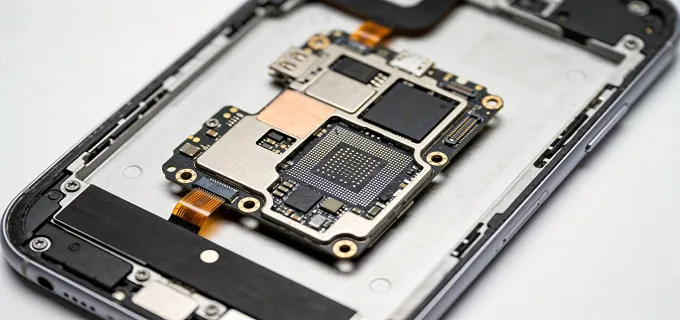
For example, in smartphones and wearable devices, HDI technology makes it possible to integrate multiple functions without increasing size or weight. Similarly, in electric vehicles and advanced driver assistance systems (ADAS), HDI boards ensure reliability under demanding conditions. With global offices in Beijing, Chengdu, Xi'an, Shanghai, Shenzhen, and a European branch in Italy, WeiYuanDa provides localized support to industries relying on these advanced applications.

Aspect | Standard PCB | High-Density Interconnect PCB (HDI) |
Structure | Uses through-holes, larger spacing, limited interconnects | Uses microvias, fine traces, higher layer counts, compact design |
Performance | Suitable for low to medium frequency applications | High-speed, high-frequency capable with reduced signal loss |
Applications | Appliances, lighting, basic consumer electronics | Smartphones, 5G devices, automotive electronics, aerospace systems |
This comparison highlights why industries are increasingly adopting HDI PCB designs over conventional boards. By providing more functionality in smaller spaces, high-density interconnect PCB solutions are redefining modern electronics.

Looking forward, the gap between standard PCB technology and HDI PCB will continue to widen as industries pursue higher integration and efficiency. High-density interconnect PCB solutions are expected to expand further into areas like renewable energy, robotics, and next-generation computing. Manufacturers like WeiYuanDa, equipped with over 24 engineers and internationally recognized certifications including ISO, IATF 16949, and UL, are positioned to drive these developments.
Standard PCBs will remain relevant for cost-sensitive projects, but the industry trend clearly favors HDI for high-performance, space-constrained applications. With rapid RFQ response times and strong engineering support, WeiYuanDa exemplifies how manufacturers can bridge today's requirements with tomorrow's innovations in HDI PCB technology.