EN
EN
 it
it  fr
fr  de
de  ru
ru  pt
pt  es
es
Get in Touch with WeiYuanDa Now!


Choosing the right Aluminum PCB material is different from choosing a standard FR-4 material. In high-heat electronics, the board must support electrical connection, insulation, mechanical strength, and heat transfer at the same time. If the material stack is not suitable, the product may still face high component temperature even when an aluminum base is used.
For LED lighting, power modules, automotive lighting, telecom devices, and compact power electronics, customers should evaluate the copper circuit layer, thermally conductive dielectric layer, aluminum base, board thickness, copper weight, surface finish, and Thermal Conductivity together.
This revised article focuses on material selection and thermal structure, so it is different from the supplier-selection article.
An Aluminum PCB normally includes three functional layers: the copper circuit layer, the thermal dielectric layer, and the aluminum base. Customers sometimes focus only on the aluminum plate, but the real thermal path passes through the whole stack-up. A weak dielectric layer or unsuitable copper design can limit heat transfer even when the aluminum base looks strong.
For this reason, material selection should start from the application. A compact LED module, a power supply board, and an automotive lighting PCB may all use aluminum-based boards, but they may require different dielectric performance, copper weight, board thickness, and surface finish.
Stack-up element | Selection focus | Why it matters |
Copper circuit layer | Copper weight, trace width, pad design | Supports current carrying and heat spreading |
Thermal dielectric layer | Thermal conductivity, dielectric thickness, insulation | Controls the main heat path from copper to aluminum |
Aluminum base | Base thickness, mechanical strength, flatness | Spreads heat and supports assembly stability |
Surface finish | OSP, ENIG, HASL-LF, immersion tin | Affects solderability, shelf life, and assembly reliability |
Thermal Conductivity is the ability of a material to transfer heat. In an Aluminum PCB, this value is usually discussed in relation to the thermally conductive dielectric layer, because that layer sits between the copper circuit and aluminum base.
A higher thermal conductivity grade can improve heat movement through the dielectric layer, but customers should avoid choosing material by one number alone. Dielectric thickness, copper thickness, LED power density, board size, operating temperature, and housing design all affect real thermal performance. A thinner dielectric may reduce thermal resistance, but insulation and manufacturing reliability still need to be maintained.
Factor | Effect on thermal performance | Customer note |
Thermal conductivity grade | Helps heat move through the dielectric layer | Compare together with dielectric thickness |
Dielectric thickness | Affects thermal resistance and insulation | Do not reduce thickness without insulation review |
Copper thickness | Improves current capacity and heat spreading | Match with current and trace width |
Aluminum base thickness | Affects strength and heat distribution | Check mounting and housing design |
Component power density | Determines heat concentration | High-power LEDs need stronger thermal design |
The right material depends on how much heat the product generates, how long it operates, and where the PCB is installed. A decorative LED board may not require the same thermal structure as a high-power street light module. A compact power module may need stronger current capacity and better heat spreading than a simple low-power lighting board.
Customers should provide application details during quotation, including working power, expected temperature rise, board size, copper weight, surface finish, assembly process, and whether the board will be attached to a heat sink or metal housing.
Application | Common material focus | Recommended discussion with manufacturer |
LED lighting modules | High thermal transfer, flatness, solderability | LED power, color stability, operating temperature |
Automotive lighting | Reliability under heat and vibration | Material stability, surface finish, testing requirements |
Power electronics | Copper weight and heat spreading | Current path, copper thickness, thermal vias, mounting |
Telecom devices | Thermal stability in compact structures | Heat source location, housing design, signal requirements |
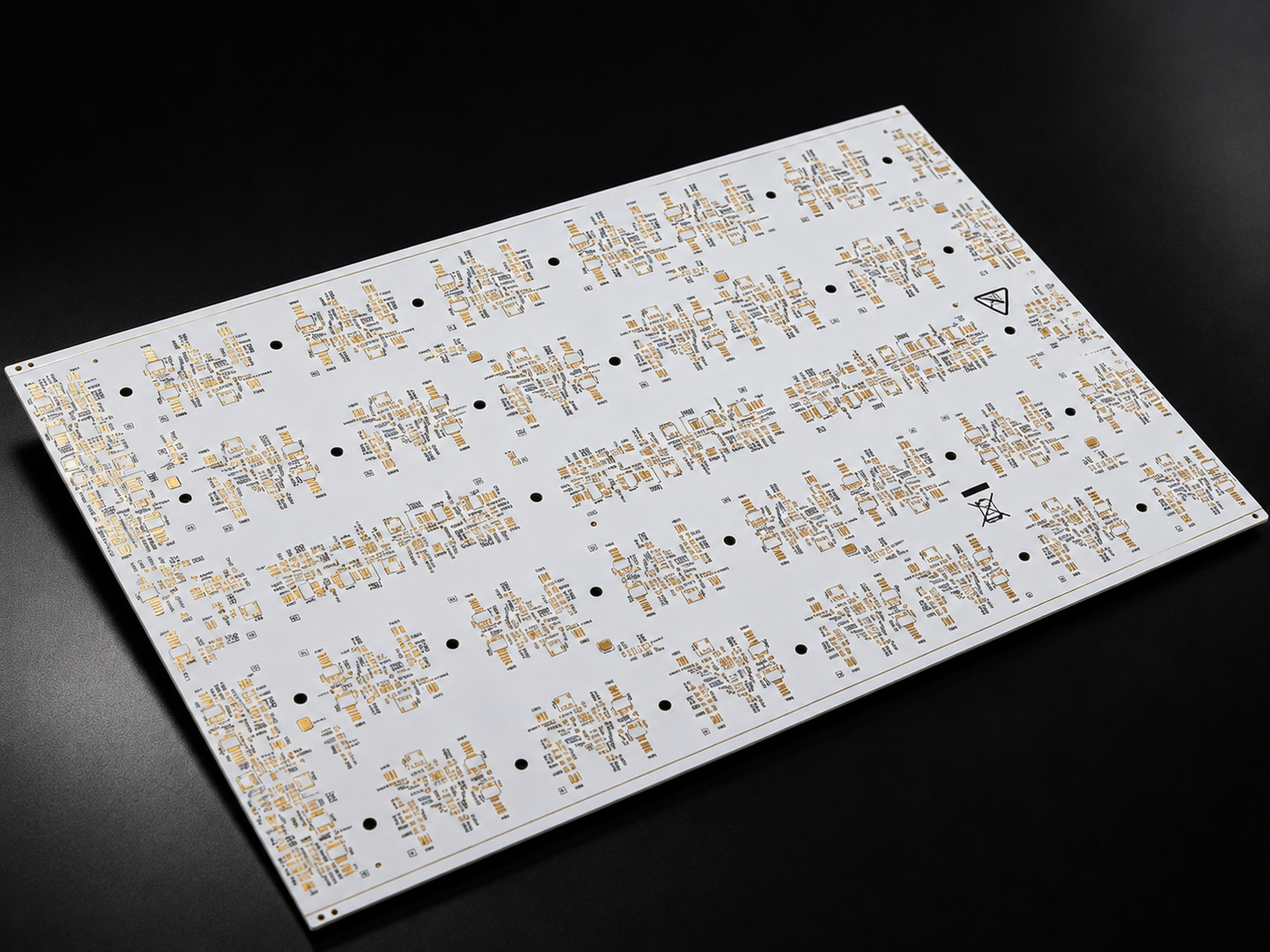
Copper weight should be selected according to current demand and layout space. Higher copper can help current carrying and heat spreading, but it also affects etching control, spacing, cost, and manufacturability. Board thickness affects mechanical strength, heat distribution, and product assembly.
Surface finish should be selected based on soldering process, component type, storage period, and reliability requirements. OSP may be suitable for cost-sensitive assembly, while ENIG can support better shelf life and surface flatness in certain projects.
Instead of asking only for the cheapest material, customers should confirm whether the proposed material matches the application environment.
· What is the expected heat load and working temperature?
· What copper weight and trace width are required for current carrying?
· What thermal conductivity grade and dielectric thickness are recommended?
· Will the PCB be mounted to a housing or external heat sink?
· Which surface finish fits the soldering process and shelf-life requirement?
· Is prototype validation required before batch production?
WEIYUANDA PCB supports customized Aluminum PCB manufacturing for LED lighting, automotive electronics, power systems, telecom equipment, and other heat-sensitive electronics. Customers can share Gerber files, stack-up targets, copper weight, surface finish needs, application background, and production volume for engineering review.
The goal is not simply to manufacture an aluminum-based board, but to help customers confirm whether the selected material stack can meet thermal, electrical, mechanical, and assembly requirements.
For more details, view WEIYUANDA Aluminum PCB manufacturing capabilities or contact the WEIYUANDA PCB team with your material and thermal requirements.
The right Aluminum PCB material should be selected according to the full thermal path, not by aluminum base thickness alone. Customers should evaluate the copper circuit layer, thermal dielectric layer, aluminum base, copper weight, surface finish, board thickness, and Thermal Conductivity together.
For high-heat electronics, a suitable material stack can help reduce thermal stress, improve LED or power device stability, and support long-term reliability. Early communication with the PCB manufacturer helps reduce trial-and-error before production.