EN
EN
 it
it  fr
fr  de
de  ru
ru  pt
pt  es
es
Get in Touch with WeiYuanDa Now!


In today’s rapidly evolving electronics landscape, consumer electronics PCBs are the hidden foundation powering smarter, thinner, and more connected devices. From smartphones, tablets, and smart TVs to wireless earbuds, gaming consoles, and IoT home devices, these printed circuit boards provide the essential electrical pathways, power delivery, and signal routing that make modern technology functional.
For product developers and manufacturers, the challenge lies in achieving the right balance between miniaturization, thermal management, RF performance, fast prototyping, and reliable assembly — all while keeping production cost-effective at scale. The design and fabrication of PCBs for consumer electronics require both technical precision and manufacturing expertise to ensure devices perform flawlessly throughout their lifecycle.
This article explores what consumer electronics PCBs are, the types and materials used today, the critical manufacturing and assembly considerations, industry applications, and why attributes such as fast turn prototyping, custom design, and full assembly services are essential for success.
A consumer electronics PCB is a printed circuit board designed specifically for products sold in mass-market consumer applications. Unlike industrial or medical boards, which may prioritize ruggedness or extended lifecycle, consumer PCBs must balance performance, cost, and manufacturability.
1. Small Form Factor and High Density (HDI) – High-density interconnect HDI PCB allows more functionality in compact spaces.
2. Signal Integrity – Reliable high-speed data and RF performance (Wi-Fi, Bluetooth, 5G) is essential.
3. Efficient Power Delivery – Ensures consistent battery operation and safe mobile charging.
4. Cost-Effective Production – Mass-market devices demand affordable manufacturing without compromising quality.
5. Fast Turn Prototyping – Rapid design iteration accelerates product launches and reduces time-to-market.
Consumer electronics PCBs integrate mobile components, power management circuits, RF front-ends, and control logic that collectively make devices responsive, reliable, and energy-efficient.
Rigid PCBs: Common in televisions, gaming consoles, and appliances, rigid PCBs are stable and relatively low-cost for high-volume runs.
Flexible and Rigid-Flex PCBs: Flexible PCBs and rigid-flex variants are central to wearables, earbuds, foldable phones, and compact camera modules — anywhere the board must bend or conform to a tight space.
HDI PCBs and Multilayer PCBs: Mobile phones, tablets, and high-performance consumer devices depend on HDI and multilayer PCBs to cram more functionality into less area while preserving signal paths and power planes.
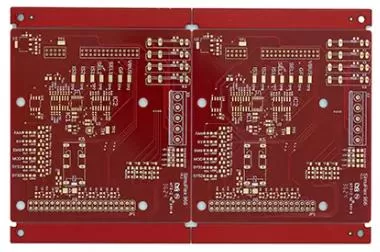
Specialty Substrates: For RF-heavy devices or high-frequency audio/video boards, manufacturers may use advanced laminates (low-loss materials) and plated thermal vias for heat dissipation.
A high-quality manufacturing process is crucial for ensuring device reliability and longevity. Typical steps include:
1. Design & DFM Review – Engineers optimize routing, impedance, thermal relief, and component placement. Early design-for-manufacturability checks reduce rework and improve yield.
2. Material Selection – FR-4 is common, but high-frequency laminates or metal-core substrates may be chosen for power or RF circuits.
3. Imaging & Etching – Copper traces are precisely patterned; HDI designs often require microvias and sequential lamination.
4. Drilling & Plating – Laser or mechanical drilling forms vias, which are plated with copper for reliable interconnections and thermal management.
5. Lamination & Stackup Control – Multilayer boards are pressed under controlled temperature and pressure to ensure consistent electrical performance and mechanical stability.
6. Solder Mask & Surface Finish – HASL, ENIG, or OSP finishes enhance solderability and long-term durability.
7. Assembly (SMT & THT) – High-speed surface mount technology lines place tiny ICs and passive components accurately. Reflow soldering and selective soldering ensure precise electrical connections.
8. Inspection & Testing – AOI, X-ray, flying probe, and functional testing catch defects early. Thermal cycling and vibration testing simulate real-world conditions.
9. Box-Build & Final Test – Some devices require integration with batteries, displays, or other subsystems before final shipment.
This end-to-end process—from fabrication to assembly and system-level testing—ensures that PCBs for consumer electronics meet both functional and regulatory requirements.
Mobile phones and earbuds demand ultra-compact routing. Microvias, blind/buried vias, and laser drilling are standard to enable small footprints.
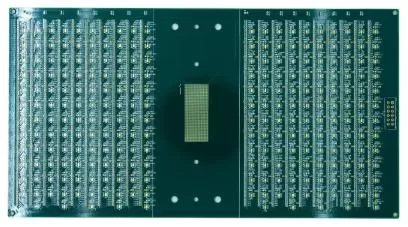
Thermal Management
High-performance SoCs and power sections need copper pours, thermal vias, and sometimes metal-core regions to pull heat away from hotspots.
EMC & Signal Integrity
High-speed traces, controlled impedance, and careful reference plane planning are mandatory to avoid interference between RF, power, and digital domains.
Power Integrity & Mobile Charger Boards
Mobile charger circuit boards and power management areas must handle surge protection, efficient DC-DC conversion, and thermal constraints — especially for fast-charging protocols.
Component Availability & Supply Chain
Selecting readily available mobile PCB components and planning for lead-time variability keeps mass production running smoothly. A close supplier partnership helps with substitutes and VMI (vendor-managed inventory).
Smartphones & Tablets: Multilayer high-density interconnect HDI PCB with integrated RF, power, display, and camera interfaces.
Wearables & Fitness Devices: Rigid-flex / flexible boards enabling ergonomic form factors.
Audio & Entertainment: Boards designed for DACs, amplifiers, and high-bandwidth video processing in TVs and consoles.
Portable Chargers & Power Banks: Robust mobile charger circuit boards focused on efficiency and safety.
Smart Home & IoT: Low-power, Wi-Fi/BLE modules on small, cost-effective PCBs.
Consumer electronics often borrow manufacturing and reliability standards from medical and industrial sectors—particularly around testing and traceability—improving overall product quality.
Time-to-market is a competitive advantage in consumer electronics. Fast turn prototyping enables rapid firmware/hardware co-development and quick iterations. Likewise, custom stackups, mechanical cutouts, and assembly options (e.g., selective soldering, conformal coating) help product teams differentiate on performance and durability.
Offering one-stop PCB assembly—from BOM sourcing to final functional test—reduces coordination overhead and shortens lead times. For brands launching seasonal products or responding to market trends, these capabilities are essential.
Consumer devices must balance low cost with acceptable failure rates. Robust QA—including lifecycle testing, FMEA, and lot traceability—reduces returns. When failures occur, offering electronic PCB board repair and refurbishment services extends product life and supports sustainability goals. Recyclable materials and greener processes are becoming priorities for reputable PCB suppliers.
Integration of RF & Power: More mixed-signal designs on a single board.
Embedded Passives & System-in-Package: Shrinking BOM and board area.
Flexible Electronics: Enabling new wearable and foldable form factors.
Advanced Materials: Low-loss laminates for better high-frequency performance.
One-stop Manufacturing: Combined fabrication, assembly, testing, and logistics to accelerate launches.
Consumer electronics PCBs are the invisible backbone of modern devices. They enable miniaturization, high-speed data transfer, power efficiency, and ergonomic designs across smartphones, wearables, smart home devices, and more. By integrating advanced materials, HDI design techniques, and full-service manufacturing capabilities, suppliers like WEIYUANDA PCB help brands deliver innovative, reliable, and market-ready products.
Fast-turn prototyping, custom stackups, flexible assembly, and robust quality management are no longer optional—they are essential for keeping pace in the competitive consumer electronics market. Partnering with a proven high-quality PCB manufacturer ensures devices perform as intended, reach the market quickly, and remain competitive globally.