EN
 it
 fr
 de
 ru
 pt
 es
Get in Touch with WeiYuanDa Now!


Choosing between an aluminum PCB and an FR-4 board affects thermal management, circuit layout, manufacturing costs, and long-term product reliability. Both are widely used in electronics, but they serve different design needs. Aluminum-based boards are particularly useful for applications that generate significant heat, such as LED lighting and power electronics. FR-4, made from glass-reinforced epoxy laminate, offers greater routing flexibility and is commonly used in general electronic circuits. Understanding their structural differences, heat-transfer capabilities, and manufacturing trade-offs helps engineers select the right PCB for each application.
The main difference lies in the materials used to support the copper circuitry. A conventional FR-4 PCB uses a glass-fiber-reinforced epoxy substrate that provides electrical insulation and mechanical strength. It can be manufactured in single-layer, double-layer, and multilayer configurations.
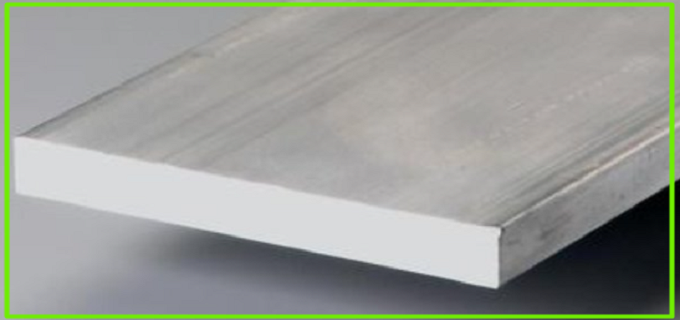
An aluminum core PCB typically consists of a copper circuit layer, a thin dielectric insulation layer, and an aluminum base. The dielectric electrically isolates the copper circuitry from the metal core while allowing heat to transfer toward the aluminum substrate.
An aluminum printed circuit board is therefore designed primarily to improve heat dissipation, whereas FR-4 supports a broader range of circuit architectures.
The key structural considerations include:
Substrate material: Aluminum provides a rigid metal base, while FR-4 uses reinforced epoxy laminate.
Thermal behavior: Aluminum-based construction helps conduct heat away from components.
Circuit complexity: FR-4 is generally more suitable for dense multilayer routing.
Mechanical properties: Both offer useful structural support, but weight, thickness, mounting, and thermal expansion must be evaluated for the specific design.
Neither material is universally better. The appropriate choice depends on electrical requirements, component power, and available cooling methods.
Thermal performance is often the main reason engineers choose an aluminum PCB. High-power LEDs, switching components, and other heat-generating devices can develop localized hot spots if heat cannot escape efficiently.
In a typical aluminum board, heat travels from the component through its solder joint and copper pad, across the dielectric layer, and into the aluminum base. The metal spreads heat over a larger area, helping reduce localized temperature concentrations when the board is properly mounted to a suitable heat sink or enclosure.
FR-4 has lower thermal conductivity than aluminum-based metal-core construction. Heat can still be managed through copper planes, thermal vias, component spacing, and external cooling, but these measures may increase design complexity.
Electrical insulation is equally important. The dielectric layer in an aluminum core PCB must withstand the required voltage while providing suitable thermal transfer. Engineers should evaluate dielectric thickness, insulation performance, thermal resistance, and manufacturer specifications.
The aluminum base does not replace electrical insulation or automatically eliminate the need for a heat sink. Actual performance depends on the complete thermal path, component placement, operating environment, and mounting arrangement.
Routing flexibility is another major difference between these PCB types. FR-4 supports single-sided, double-sided, and multilayer designs, making it suitable for complex circuits with dense component placement, multiple signal layers, and power and ground planes.
Standard aluminum PCBs commonly use a single copper circuit layer over a dielectric and metal base. Double-sided and more complex metal-core constructions are available, but they may involve additional manufacturing constraints and cost.
Design consideration | Aluminum PCB | FR-4 PCB |
|---|---|---|
Thermal dissipation | Well suited to heat-generating components | Requires suitable copper and cooling design |
Layer options | Commonly single-layer; other options vary | Single-layer to multilayer |
Routing density | Often more limited | Highly flexible |
Thermal vias | Depends on construction | Widely used in suitable multilayer designs |
Typical cost factors | Metal base and dielectric specifications | Layer count, complexity, and fabrication requirements |
For compact power circuits, a single-layer aluminum board may simplify thermal management. For processors, communication circuits, or designs requiring many interconnected signals, FR-4 often provides a more practical routing solution.
An aluminum PCB may require additional attention to mounting and thermal interfaces. The board must make suitable contact with its enclosure or heat sink when the design relies on the metal base to remove heat. Flatness, mounting pressure, interface materials, and fastener placement can influence thermal performance.
FR-4 boards are generally compatible with a wide range of standard PCB assembly processes. They can accommodate various component packages and multilayer layouts without requiring a metal-core structure.
Cost comparisons should consider the complete product rather than the bare board alone. Aluminum PCB pricing depends on metal thickness, dielectric properties, copper specifications, board dimensions, and production volume. FR-4 costs vary with layer count, material grade, routing density, and fabrication complexity.
Although an aluminum board may cost more than a basic FR-4 board, it can reduce the need for separate thermal-management measures in suitable applications. Conversely, using aluminum where heat dissipation is not a major concern may add unnecessary expense.
Application requirements provide the clearest basis for material selection.
LED lighting: Aluminum PCBs are often suitable for high-power LED modules because they help transfer heat away from LED packages, supporting thermal management and service life.
Power converters: Metal-core boards can suit power components that generate concentrated heat, provided electrical isolation and circuit layout requirements are satisfied.
Control electronics: FR-4 is often preferable for control boards that combine digital signals, connectors, and multiple circuit layers.
Communication and computing: FR-4 commonly supports dense routing and complex interconnections more economically.
Mixed thermal requirements: Some products use FR-4 for control circuitry and aluminum PCBs for power or LED sections, allowing each board to serve a specific function.
Before selecting an aluminum PCB board or FR-4 alternative, assess component power dissipation, maximum operating temperature, insulation requirements, routing complexity, and total manufacturing cost. Thermal simulation or prototype testing can help verify the design under realistic operating conditions.

An aluminum PCB is a strong option when heat dissipation is a primary design requirement, particularly for LED lighting and power electronics. FR-4 remains a versatile choice for complex circuits that need multilayer routing and broad manufacturing flexibility. Comparing thermal performance, insulation, routing needs, mounting conditions, and total cost helps engineers select the most appropriate substrate for reliable electronic products.
Not in every application. Aluminum PCBs are advantageous for many heat-generating circuits, while FR-4 generally offers greater routing flexibility and suits complex electronic designs.
Yes, specialized multilayer metal-core constructions are available. However, they may involve greater design and manufacturing complexity than conventional aluminum boards.
It can be, depending on the board specifications and order volume. The total cost should also include mounting hardware and any additional thermal-management requirements.
Aluminum PCB construction is commonly used for high-power LEDs because its metal base helps spread heat. The final choice should still be verified against the LED's thermal requirements and the complete cooling design.